---
title: "Restaurant Hiring: Stay Fully Staffed & Compliant Without Burning Cash"
description: Effective strategies for restaurant hiring in 2026 to stay fully staffed, reduce turnover costs, and ensure compliance without breaking the bank.
image: https://site.standbyjobs.com/hubfs/Standby%20Blog%20Post%20Headers.png
---
[Skip to content](https://site.standbyjobs.com/blog/restaurant-hiring-in-2026#main-content)
Homepage
[Learn More](https://standbyjobs.com)
[Learn More](https://standbyjobs.com)

staffing solutions scheduling solutions Restaurants
# Restaurant Hiring: Stay Fully Staffed & Compliant Without Burning Cash

Miranda
March 16, 2026
## Why Hiring Restaurant Employees in 2026 Is So Hard (But Non-Negotiable)
By February 2026, national restaurant employment has only slightly exceeded February 2020 levels. Yet many full-service restaurants still report being understaffed on busy nights. The lingering effects of the pandemic, combined with demographic shifts—more retirements, fewer young workers entering hospitality—have hit the restaurant industry hard. Industry leaders and workers are feeling anxious and uncertain about the ongoing labor shortages and demographic changes, as the future of restaurant challenges in hiring remains unpredictable.
Labor shortages have a significant impact on the broader economy and directly affect the restaurant industry's ability to maintain service standards. Demographic trends indicate that thousands of workers—specifically, 4.1 million—will retire annually through 2027, with not enough younger workers to replace them. Many older workers who left during the pandemic are not returning, having retired or moved on to different careers.
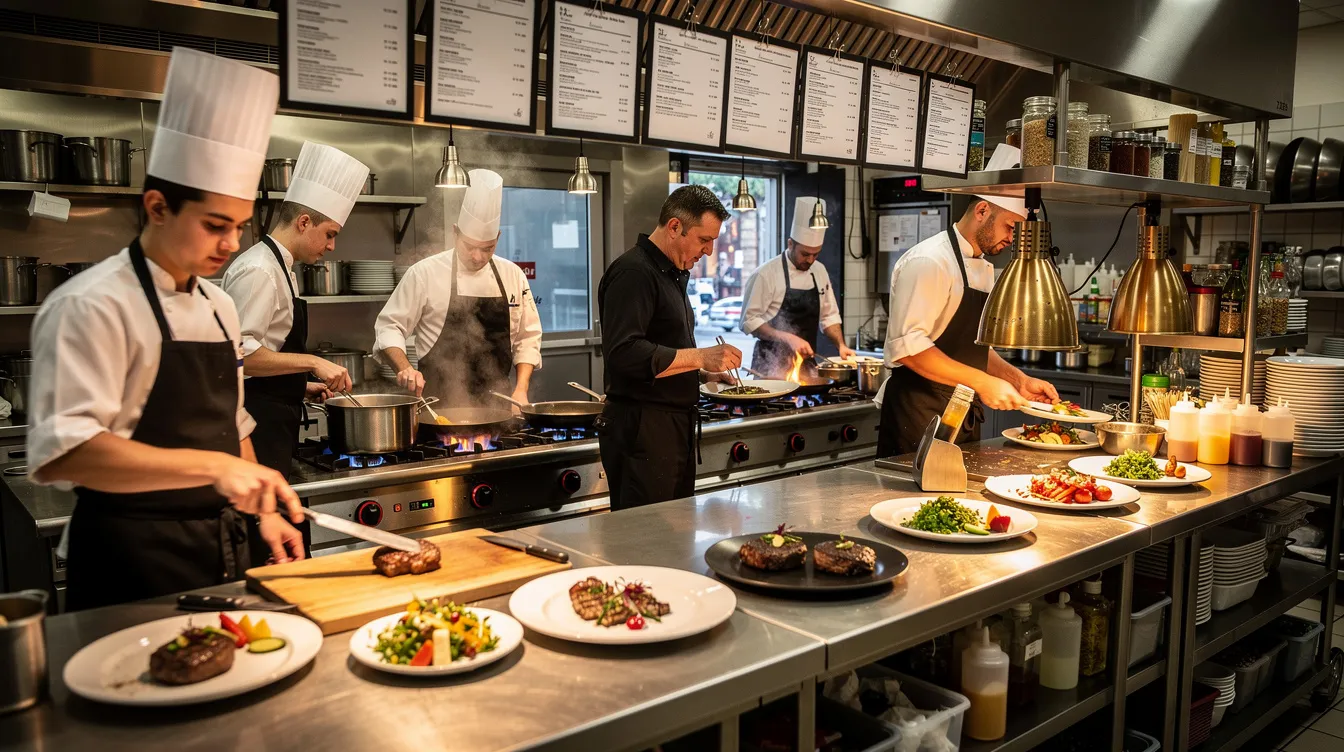
Running lean is tempting because it looks good on your P&L. But understaffed shifts lead to slower ticket times, inconsistent service, more comped meals, and lower online ratings that quietly erode revenue over time. High turnover and stressful working conditions can further impact a restaurant's ability to deliver quality service and protect its reputation. Customers notice when orders take too long or when food arrives cold from the kitchen.
Modern restaurant recruiting isn’t just about filling open job positions. It’s about always having enough trained, compliant people in the building to handle demand spikes, online orders, and special programs. This article will help you compare hiring options and design a staffing strategy that balances cost, compliance, and service quality.
```
```
## The Real Cost of Hiring a Restaurant Employee in 2026
Many operators only think about employee hourly wage when budgeting labor. The reality is far more expensive. For a $18/hour server in a place like Denver, you’re also paying:
- **Payroll taxes**: 7.65% employer share of FICA, plus state unemployment insurance (2-6% depending on your state)
- **Workers’ comp premiums**: Especially high for back-of-house roles
- **Recruiting costs**: Job board postings ($200–$500), manager time interviewing (5-10 hours at $30-$50/hour), background checks
- **Training and ramp-up**: 20–40 hours of paid orientation before workers are fully productive, easily adding $500–$1,500 per hire
Here’s the real problem: [annual employee turnover for front-of-house and back-of-house hourly roles commonly exceeds 80–120% in 2026.](https://staffcost.com/blog/employee-turnover-rate-by-industry-2026) Many establishments are effectively rebuilding their team every year. The average cost to replace an hourly restaurant employee runs approximately $5,864—and that’s per person you lose. Implementing strategies to retain experienced workers, such as flexible scheduling, mental health support, and incentive programs, is crucial to reducing these costs.
When you factor in failed hires and early quits, realistic all-in cost per hourly hire often lands between $4,000–$7,000. Offering pay raises and bonuses tied to retention can help retain staff and further reduce turnover expenses. Tools like Standby’s scheduling, time tracking, and on-demand staffing can lower this by reducing mis-hires and emergency overtime pay situations. When vetting candidates, it’s important to seek responsible team members to ensure reliability and accountability on your team.
## Traditional Restaurant Staffing Agencies: Why the Old Model Is Breaking
Conventional staffing agencies for restaurants were built for pre-2020 labor markets. Their model typically includes placements, temp-to-hire arrangements, and long-term contracts—none of which adapt well to the unpredictable nature of modern food service.
**Typical fee structures in 2026:**
| **FEE TYPE** | **RANGE** |
| --- | --- |
| Temp worker markup (BOH) | 35%–50% above base wage |
| Temp worker markup (FOH) | 30%–45% above base wage |
| Direct hire placement fee | 15%–25% of first-year salary |
| Conversion fees | $1,000–$3,000+ per candidate |
Beyond cost, there’s operational friction: slow response times on last-minute shifts, generic candidate pools, and no integration with your scheduling or POS systems. Managers spend hours coordinating coverage instead of running the floor. Employers must resolve ongoing staffing challenges with strategic solutions that address both recruitment and retention in today’s hospitality industry.
The bigger risk is compliance. Many agencies rely heavily on 1099 classification. [Since 2022, federal regulators and states like Utah and California have aggressively targeted misclassification in hospitality.](https://www.independentcontractorcompliance.com/2024/03/07/the-delicate-case-for-reclassification-of-independent-contractors-february-2024-ic-legal-news-update/) This can result in back pay, penalties, and tax liabilities that far exceed any perceived savings.
## Why Job Boards Are No Longer the Best Way to Hire for Restaurants
Job boards have also long been a staple in restaurant recruiting, but their effectiveness has diminished significantly in recent years. While they offer broad reach, they often attract a high volume of unqualified or non-committed candidates, leading to wasted time and resources for managers. Industry-specific job boards and social media platforms are essential for reaching younger talent in restaurant professions.
**Common challenges with job boards in restaurant recruitment:**
- **High volume, low quality:** Job boards tend to generate many applications, but a large portion of these candidates lack relevant experience or the reliability needed for fast-paced restaurant environments.
- **Time-consuming screening:** Managers spend hours sifting through resumes and conducting interviews, pulling them away from crucial daily operations and guest service.
- **Delayed response times:** Candidates often apply to multiple job listings simultaneously, leading to slow follow-up and increased risk of losing top talent to competitors.
- **Limited candidate engagement:** Job boards rarely provide opportunities to showcase the restaurant’s culture or career growth potential, which are key factors for today’s job seekers.
- **Lack of integration:** Unlike modern staffing platforms, job boards generally do not integrate with scheduling or payroll systems, resulting in fragmented hiring and onboarding processes.
In a competitive labor market, relying solely on job boards can leave restaurants understaffed and scrambling to fill shifts. Modern hiring solutions that combine technology, vetted candidates, and streamlined management tools offer a more efficient and compliant alternative to traditional job boards.
To better understand current hiring trends, view the latest employment data for your state or region.
## Why W-2, Insured, and Compliant Workers Matter More Than Ever
Wage-and-hour enforcement has tightened dramatically. Restaurants face unique exposure due to tipped wages, split shifts, tip pooling regulations, and long hours that can trigger overtime requirements.
**Key compliance areas for restaurant owners:**
- Federal FLSA requirements for minimum wage and overtime (time-and-a-half for every hour worked over 40 per week)
- Restaurants and fast food businesses with annual gross sales of at least $500,000 are subject to the Fair Labor Standards Act (FLSA)
- State and city rules on break compliance and predictive scheduling
- Proper tip pooling and tip credit administration
- Workers’ compensation and unemployment insurance obligations
Covered non-exempt workers in restaurants are entitled to a federal minimum wage of not less than $7.25 per hour. Employers must pay tipped employees at least $2.13 an hour in direct wages and ensure that tips received make up the remainder of the minimum wage. Wages must be paid on a regular schedule aligned with the pay period. Deductions from wages for items such as cash shortages or required uniforms are illegal if they reduce the employee's wages below the minimum wage. Meal discounts or food prices can affect wage calculations and deductions, so employers must ensure compliance with wage laws. It is illegal for managers or owners to keep employees' tips or participate in a tip pool, except under specific conditions. Tipped employees must retain all of their tips, except to the extent that they participate in a valid tip pooling or sharing arrangement. Unpaid training shifts are illegal; if employees are required to participate in training, they must be paid for that time. The vast majority of restaurant workers qualify for overtime pay under federal and state laws if they work more than 40 hours a week.
Under the[FLSA, employees in administrative, executive, and professional roles may be exempt](https://www.dol.gov/agencies/whd/fact-sheets/17c-overtime-administrative#:~:text=Revised%20August%202024,employees%20of%20$107%2C432%20per%20year.) from overtime if certain salary and duty criteria are met. These exemptions require that specific tests are met regarding both the employee’s salary level and their primary job duties. For example, executive employees must primarily manage the business or a department, direct the work of at least two other employees, and have authority over hiring or firing decisions. Administrative employees must perform office or non-manual work related to management or general operations, exercising discretion and independent judgment on significant matters.
Age restrictions also apply under the FLSA, determining permissible job duties, working hours, and wages for minors. For example, minors under certain ages are limited in the hours they can work and are prohibited from performing hazardous jobs. There are also strict regulations on the types of equipment minors can operate in restaurants, such as prohibitions on using power-driven meat processing machines or certain bakery equipment.
Most hourly front-of-house and back-of-house roles should legally be W-2 employees under current interpretations. Classifying them as 1099 contractors is often non-compliant and exposes your business to serious liability.
Standby acts as employer-of-record for its on-demand workforce, handling payroll, taxes, workers’ comp, and benefits where applicable. This means operators can [access flexible labor without misclassification risk](https://standbyjobs.com/restaurant-staffing-solutions/). Owners should regularly audit their labor mix to ensure workers are classified properly and paid in compliance with local laws.
## Building a Resilient Restaurant Staffing Strategy: Always Staffed, Never Scrambling
The goal isn’t just filling open roles—it’s designing a system that anticipates call-outs, seasonality, and growth before they become emergencies.
**Start with baseline staffing levels:**
- Analyze sales and labor data from the last 6–12 months by part of day (lunch, dinner, late night)
- Map minimum coverage by channel: dine-in, takeout, delivery
- Identify patterns around holidays, menu launches, and local events
**Create a smart labor mix:**
- Core team of full-time W-2 employees for consistency
- Part-time bench for weekends and special events
- Access to a vetted, on-demand network of Pros (like [Standby](http://standbyjobs.com)) for sick calls and demand spikes
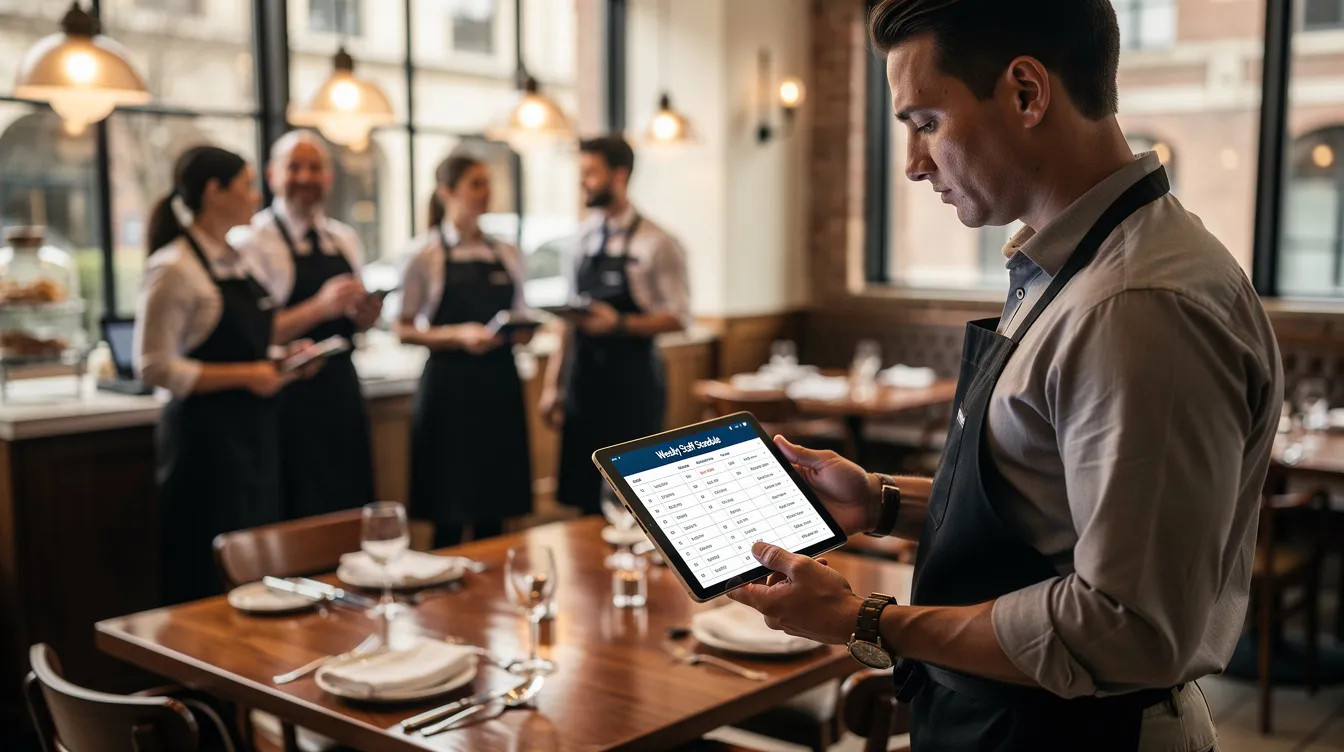
Use scheduling software to forecast labor against sales, detect overtime risk before the schedule is posted, and ensure break compliance. Cross-train staff across stations so workers from a vetted network can plug in faster while maintaining brand standards.
Track key KPIs each month—labor cost as a percentage of sales, average check, ticket times, and guest satisfaction scores—to prove that better staffing levels actually pay for themselves.
## How Standby Modernizes the way Restaurants Find Employees and Staff their Teams
[Standby is an all-in-one restaurant workforce platform](http://standbyjobs.com) combining scheduling, time tracking, tip management, and on-demand W-2 staffing under one roof.
**Day-to-day operations:**
- [Build weekly schedules](https://standbyjobs.com/restaurant-scheduling-software/) and track time punches in real time
- Manage breaks and overtime to protect compliance
- [Export timesheets](https://standbyjobs.com/time-tracking-app-for-restaurants/) directly to payroll or run payroll through Standby
**Hire with Standby:**
- Tap into a vetted network of restaurant-specific professional workers—servers, bartenders, line cooks, dishwashers, hosts
- All workers are W-2 employees of Standby, meaning Standby handles payroll taxes, workers’ comp, and insurance
**Real-world use cases:**
- Fill a Saturday night line cook call-out with two hours’ notice
- Scale up staff for a patio opening in May 2026
- Cover holiday season spikes without hiring seasonal full-timers
Ready to begin? Visit the Standby website to [request a demo](https://standbyjobs.com/book-a-demo/) and see live coverage options in your city.
## Saving Time and Money with a Vetted, Restaurant-Only Talent Network
Managers currently lose 5–10 hours per hire posting jobs, screening resumes, and dealing with no-show interviews. That’s time better spent on operations, guests, and the menu.
Standby focuses exclusively on restaurant and hospitality roles. The network is pre-filtered for people who understand how to handle rushes, work POS systems, maintain clean conditions, and meet guest expectations.
Candidates are vetted for:
- Work history and legal authorization
- Reliability metrics and attendance records
- Skills assessments and reference checks
This reduces bad hires, early attrition, and training waste. You can “try” workers via shifts before making long-term commitments. Integrate this vetted group into your ongoing strategy—not just emergencies—by pre-booking coverage for known busy holidays, promotions, or new menu launches.
## FAQs
How does Standby pricing compare to traditional restaurant staffing agencies?
While agencies often charge 30%–60% markups or large placement fees, Standby uses transparent hourly rates that already include payroll taxes, insurance, and platform features. You pay only for hours worked by W-2 staff, with no surprise fees or long-term contracts required.
Can I use Standby for just last-minute call-outs, or do I need to commit to ongoing volume?
You can start with purely last-minute shift coverage—same-day call-outs or unexpected spikes—then expand into planned shifts, regular weekend coverage as needed, or even test out full-time hires without the risks and costs associated. Standby complements your existing team rather than replacing it.
Does using Standby workers create any co-employment or misclassification risk?
Standby serves as employer-of-record, classifying workers as W-2 employees and handling payroll taxes, workers’ comp, and insurance. This structure minimizes misclassification and wage-and-hour risk compared with 1099 gig platforms.
Can I hire a Standby worker onto my own payroll?
In many markets, Standby supports temp-to-hire arrangements where you can transition workers to your roster after an agreed number of hours. Contact Standby for current terms, as they may vary by state in 2026.
What cities and restaurant segments does Standby currently support?
Standby serves major U.S. restaurant hubs including New York, Los Angeles, Chicago, Dallas, and Atlanta, with ongoing expansion. The platform works with full-service establishments, fast casual, bars, event venues, and hotel restaurants. Check the Standby page for the most current coverage map.
## Share this post
[mailto:https%3A%2F%2Fsite.standbyjobs.com%2Fblog%2Frestaurant-hiring-in-2026](mailto:https%3A%2F%2Fsite.standbyjobs.com%2Fblog%2Frestaurant-hiring-in-2026)
## Keep reading
### [.png?width=2240&height=1260&name=Standby%20Blog%20Post%20Headers%20(2).png) staffing solutions scheduling solutions Restaurants Restaurant Staffing: How to Build Resilient Teams Amid Shortages and Turnover](https://site.standbyjobs.com/blog/restaurant-staffing-2026)
### [-1.png?width=2240&height=1260&name=Blog%20post%20headers%20(78)-1.png) staffing solutions scheduling solutions Restaurants Work Shift Schedule Maker for Restaurants](https://site.standbyjobs.com/blog/work-shift-schedule-maker-for-restaurants)
[](http://standbyjobs.com)
---
Privacy Policy · Legal · © 2026 Standby Software Solutions, Inc.. All rights reserved.
```json
{
"@context" : "https://schema.org",
"@type" : "BlogPosting",
"author" : {
"@type" : "Person",
"name" : "Miranda",
"url" : "https://site.standbyjobs.com/blog/author/miranda-1"
},
"dateModified" : "2026-03-16T16:04:26.048Z",
"datePublished" : "2026-03-16T16:03:23.000Z",
"headline" : "Restaurant Hiring: Stay Fully Staffed & Compliant Without Burning Cash",
"image" : [ "https://site.standbyjobs.com/hubfs/Standby%20Blog%20Post%20Headers.png" ],
"mainEntityOfPage" : {
"@id" : "https://site.standbyjobs.com/blog/restaurant-hiring-in-2026",
"@type" : "WebPage"
},
"publisher" : {
"@type" : "Organization",
"logo" : {
"@type" : "ImageObject",
"url" : "https://site.standbyjobs.com/hubfs/Standby%20Final%20Logo.png"
},
"name" : "Standby Software Solutions, Inc."
}
}
```